Runtime planning
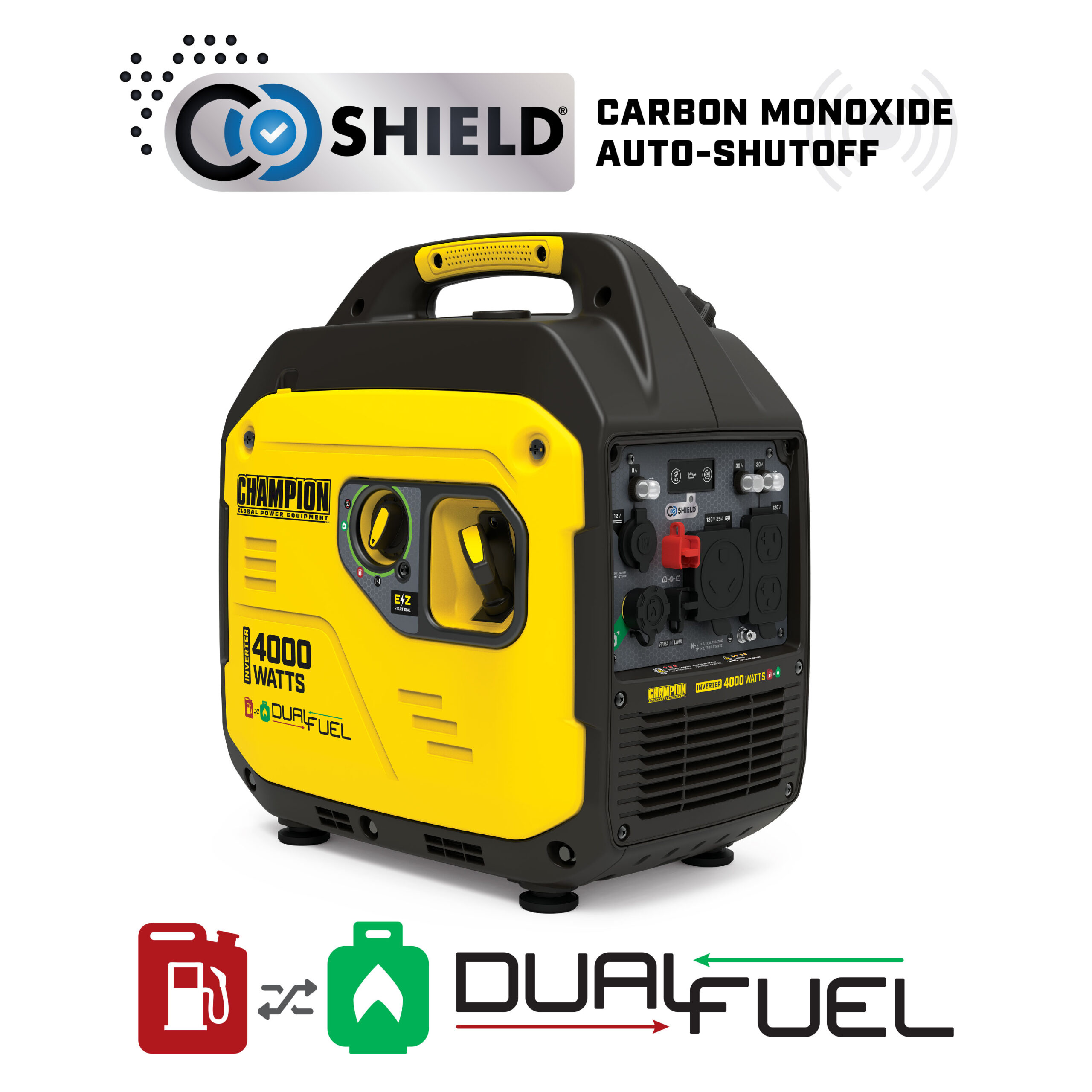
Champion 201050 4000W Dual Fuel Inverter Runtime and Fuel-Use Planning
Plan Champion 201050 4000W Dual Fuel Inverter runtime by load and fuel without confusing a best-case published claim with the hours your equipment will receive power.
As an Amazon Associate we earn from qualifying purchases. We do not copy Amazon pricing into this article because price and availability change.
Direct answer
Runtime is a load-and-fuel question, not a fixed feature. Use the manufacturer’s model-specific claim only when its fuel, tank or cylinder, and test-load condition match your plan.
Running output
3,000W
Peak output
4,000W
Published weight
51.8 lb
Class score
46/100
Runtime is not one fixed number
The Champion 201050 4000W Dual Fuel Inverter will not run the same number of hours at every load. Runtime changes with electrical demand, fuel, tank or cylinder size, eco-mode behavior where applicable, temperature, altitude, engine condition, and cycling loads. A published maximum without its test condition is not enough for outage planning.
At 25%, 50%, and 75% of rated output, this model’s theoretical electrical loads are about 750W, 1,500W, and 2,250W. Use those reference points to find the closest manufacturer runtime test—never as a promise that fuel use scales perfectly.
Read the manufacturer claim correctly
A usable runtime statement names the fuel, tank or cylinder, and test load. Eight hours at 25% load is not directly comparable with eight hours at 50% load because the second generator is delivering twice its rated-load percentage during the test.
The class benchmark does not contain enough directly comparable runtime data for a dependable percentile. The full model page preserves the published wording so you can see the conditions instead of comparing the hour number alone.
Estimate your average load
List the loads that will operate simultaneously, then account for duty cycles. A refrigerator or furnace blower cycles; lights and a router may be nearly constant; a pump may run briefly but start hard. Average load can be much lower than the sum of every device label, but the generator must still survive the largest simultaneous event.
Keep the planned continuous load under the 3,000W rating and preserve startup headroom. Once you have a realistic average, compare it with the load percentage used in the official runtime claim. That produces a planning range—not a guarantee.
Fuel choice changes output and endurance
Gasoline + Propane gives the owner more flexibility during an outage, but rated output and runtime can change by fuel. Compare the fuel-specific figures on the full specification page instead of assuming the gasoline rating applies to every fuel.
For propane, cylinder size, fill level, ambient temperature, and regulator capacity can affect performance. For gasoline, storage age, stabilizer practice, refueling intervals, and safe on-site storage become part of the plan. Refuel only after shutdown and cooling, following the exact manual.
Build an outage fuel plan
Decide how many hours per day the generator must run, which loads can be staggered, how fuel will be stored safely, and how the unit will be shut down for inspection and refueling. A schedule with charging windows and refrigerator cycling can stretch limited fuel more effectively than continuous operation with low-priority loads.
Recheck the plan seasonally. Cold weather, summer cooling loads, pump requirements, fuel availability, and household occupancy can change the average load and the amount of fuel needed for the same outage duration.
Closest catalog alternatives
Three similar generators worth comparing.
Sportsman
GEN3500DFI
3,000W running · 3,500W peak · Gasoline + propane
Inspect modelGenerac
iQ3800 Dual Fuel 49ST
3,000W running · 3,800W peak · Gasoline + propane
Inspect modelGenerac
iQ3800 Dual Fuel 50ST
3,000W running · 3,800W peak · Gasoline + propane
Inspect modelQuick answers
Champion 201050 4000W Dual Fuel Inverter FAQ
How many running watts does the Champion 201050 4000W Dual Fuel Inverter provide?
3,000 running watts are listed in the normalized catalog. The model also lists 4,000 peak watts for temporary startup demand.
What fuel does the Champion 201050 4000W Dual Fuel Inverter use?
Gasoline + Propane. When multiple fuels are supported, verify the separate output and runtime figures for the fuel you plan to use.
How long will the Champion 201050 4000W Dual Fuel Inverter run on one tank or cylinder?
Runtime changes with fuel, tank or cylinder, electrical load, mode, temperature, and operating conditions. Use the model-specific published claim only with its stated test load, then plan a range.
Sources and method
Check the evidence behind the analysis.
Continue this model research