RV and campsite fit
Champion 201050 4000W Dual Fuel Inverter for RV and Camping: Power, Noise and Portability
Evaluate the Champion 201050 4000W Dual Fuel Inverter for RV and camping use using output, portability, published noise, connection checks, and real ownership tradeoffs.
As an Amazon Associate we earn from qualifying purchases. We do not copy Amazon pricing into this article because price and availability change.
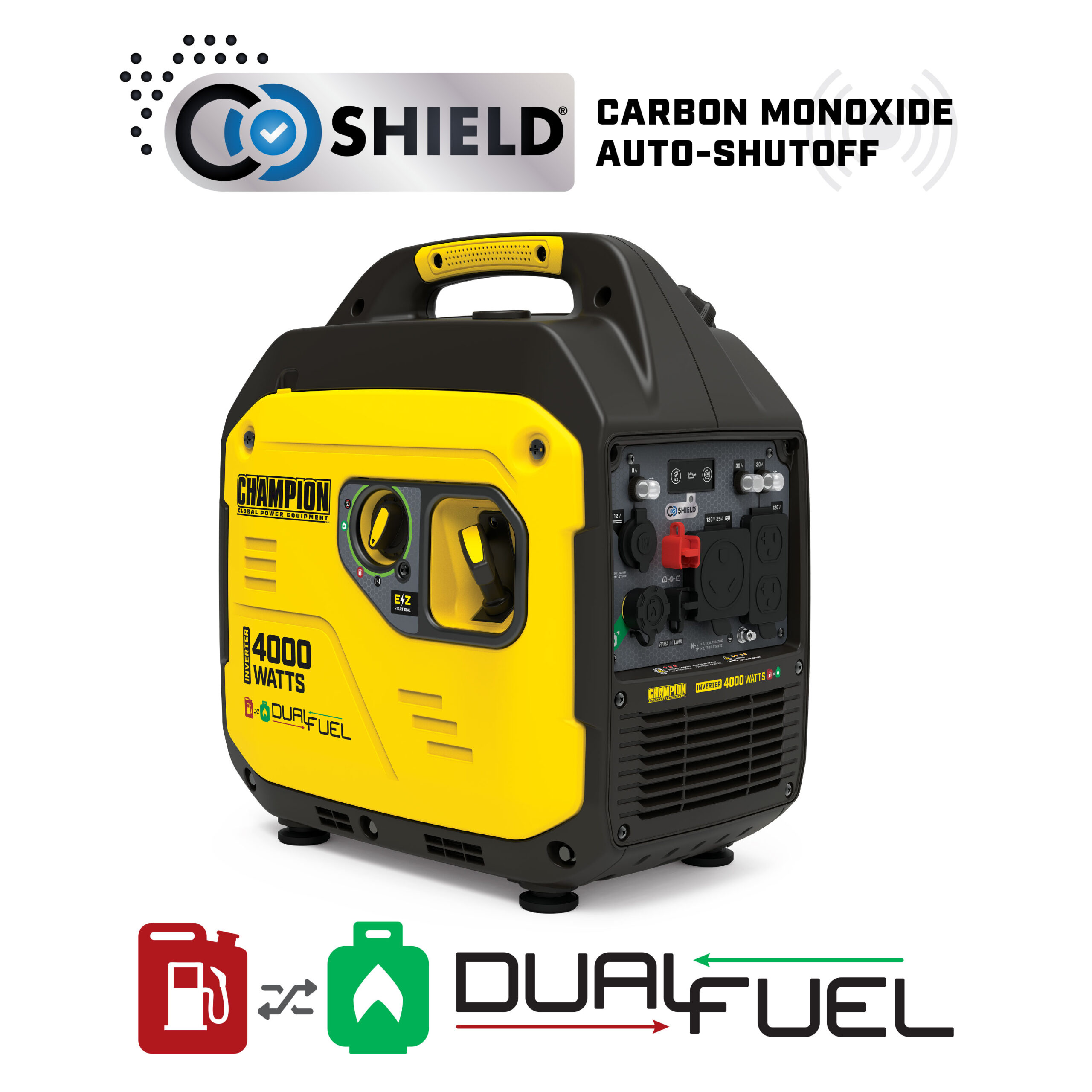
Direct answer
For RV use, the Champion 201050 4000W Dual Fuel Inverter is in the practical range many RV shoppers consider for an air conditioner plus carefully managed secondary loads. Confirm the exact receptacle, adapter, campground sound rules, and air-conditioner startup requirement before treating it as a match.
Running output
3,000W
Peak output
4,000W
Published weight
51.8 lb
Class score
46/100
RV and campsite verdict
The Champion 201050 4000W Dual Fuel Inverter is in the practical range many RV shoppers consider for an air conditioner plus carefully managed secondary loads. Its 3,000 running watts should be compared with the RV’s shore-power service, air-conditioner startup requirement, battery charger or converter, microwave, refrigerator mode, water heater mode, and any simultaneous convenience loads.
A model can have enough watts but still be inconvenient if it lacks the preferred receptacle, needs an awkward adapter, is too heavy for the storage bay, or exceeds a campground sound rule. Those fit questions should be resolved before price breaks a tie.
Plan around air-conditioner startup
An RV air conditioner is often the largest startup event. Use the exact unit label or manufacturer data rather than a generic BTU estimate. A compatible soft-start device may reduce starting demand, but its effect must be verified for the actual air conditioner and installation.
After reserving the startup surge, add steady loads that will run at the same time. The Champion 201050 4000W Dual Fuel Inverter publishes 4,000 peak watts, but the sustainable budget remains 3,000 running watts. Staggering the microwave, water heating, hair dryer, coffee maker, or second air conditioner can materially reduce required generator size.
Check the receptacle—not just an “RV ready” label
Confirm the exact receptacle type, voltage, amperage, adapter requirement, and neutral or grounding instructions. A 30A travel trailer, 50A coach, and small camper do not present the same connection or load-management problem.
Use cords and adapters listed for the load and outdoor environment. Keep connections dry and inspect them for heat or damage. An adapter changes the plug interface; it does not create more voltage, amperage, or wattage than the generator can supply.
Noise and transport reality
The published sound figure is 64 dBA. That number is useful only with its test distance and load condition, so it should be treated as a comparison point—not a promise of what every owner will hear.
At 51.8 lb, it falls on the more manageable side of portable generation, though fuel and accessories add to the real transport load.
Best-fit RV owner
The strongest RV fit is an owner who knows the coach’s service, can safely transport the generator, has an outdoor placement and security plan, and is willing to manage simultaneous loads. Gasoline + Propane gives the owner more flexibility during an outage, but rated output and runtime can change by fuel. Compare the fuel-specific figures on the full specification page instead of assuming the gasoline rating applies to every fuel.
Compare the Champion 201050 4000W Dual Fuel Inverter with Sportsman GEN3500DFI, Generac iQ3800 Dual Fuel 49ST, Generac iQ3800 Dual Fuel 50ST. A smaller alternative may be easier to carry and quieter; a larger one may handle a second major load but consume more space and fuel.
Closest catalog alternatives
Three similar generators worth comparing.
Sportsman
GEN3500DFI
3,000W running · 3,500W peak · Gasoline + propane
Inspect modelGenerac
iQ3800 Dual Fuel 49ST
3,000W running · 3,800W peak · Gasoline + propane
Inspect modelGenerac
iQ3800 Dual Fuel 50ST
3,000W running · 3,800W peak · Gasoline + propane
Inspect modelQuick answers
Champion 201050 4000W Dual Fuel Inverter FAQ
How many running watts does the Champion 201050 4000W Dual Fuel Inverter provide?
3,000 running watts are listed in the normalized catalog. The model also lists 4,000 peak watts for temporary startup demand.
What fuel does the Champion 201050 4000W Dual Fuel Inverter use?
Gasoline + Propane. When multiple fuels are supported, verify the separate output and runtime figures for the fuel you plan to use.
Is the Champion 201050 4000W Dual Fuel Inverter RV ready?
Verify the exact receptacle, voltage, amperage, adapter needs, and the RV load plan on the model page and in the manual. “RV ready” does not guarantee compatibility with every coach or appliance combination.
Sources and method
Check the evidence behind the analysis.
Continue this model research