Ownership guide
Oxseryn EDOG10 4400W Inverter Maintenance Schedule and Ownership Checklist
Use this Oxseryn EDOG10 4400W Inverter maintenance and storage checklist to plan oil, fuel, exercise, inspection, and long-term ownership.
As an Amazon Associate we earn from qualifying purchases. We do not copy Amazon pricing into this article because price and availability change.
Direct answer
The best maintenance plan follows the exact manual, keeps fuel and oil dates documented, exercises the generator under a useful load, and checks the unit before storm season—not after the utility fails.
Running output
3,400W
Peak output
4,400W
Published weight
56 lb
Class score
54/100
The exact manual controls the schedule
Use the Oxseryn EDOG10 4400W Inverter manual for break-in, oil type and intervals, spark plug, air filter, valve inspection, battery care where applicable, storage, and service procedures. Generic schedules are useful reminders but cannot override a model-specific instruction.
Create a log with date, engine hours, work performed, fuel condition, load test, and any fault. That record makes seasonal preparation repeatable and can support warranty or service conversations.
Before every use
Inspect for fuel or oil leaks, damaged cords, blocked ventilation, loose hardware, debris, animal nesting, corrosion, and missing covers. Check oil on level ground using the manual procedure. Confirm the outdoor operating area and working carbon-monoxide alarms before starting.
Review the load plan against the 3,400W running rating and the fuel you will use. Keep loads disconnected during startup unless the manual states otherwise, then add them deliberately while watching for overload or unstable operation.
Exercise under a meaningful load
A brief no-load start proves less than many owners think. Follow the manufacturer’s storage and exercise guidance, allow the engine to reach normal operation, and use a safe, appropriate load so the generator and outlets are tested—not merely the starter motor.
Watch for hard starting, hunting, smoke, unusual vibration, leaks, hot connectors, warning lights, or unstable output. Resolve problems before storm season. Never run a fuel-burning generator in a garage or other enclosed or partly enclosed space during an exercise test.
Fuel and storage are maintenance decisions
Gasoline keeps the operating plan straightforward, but it also makes fuel storage, rotation, and outage availability part of the buying decision.
For gasoline storage, follow the manual’s direction on stabilizer, carburetor draining or fuel shutoff, tank condition, and storage duration. For propane equipment, inspect the hose, regulator, connections, and cylinder condition. Store fuels only in approved containers and locations.
Build an ownership kit
Keep the manual, approved oil, funnel, spark plug and gap tool where appropriate, air filter, basic hand tools, fuel supplies, heavy-duty cords, flashlight, hearing protection, carbon-monoxide alarms, and a printed load and shutdown plan together.
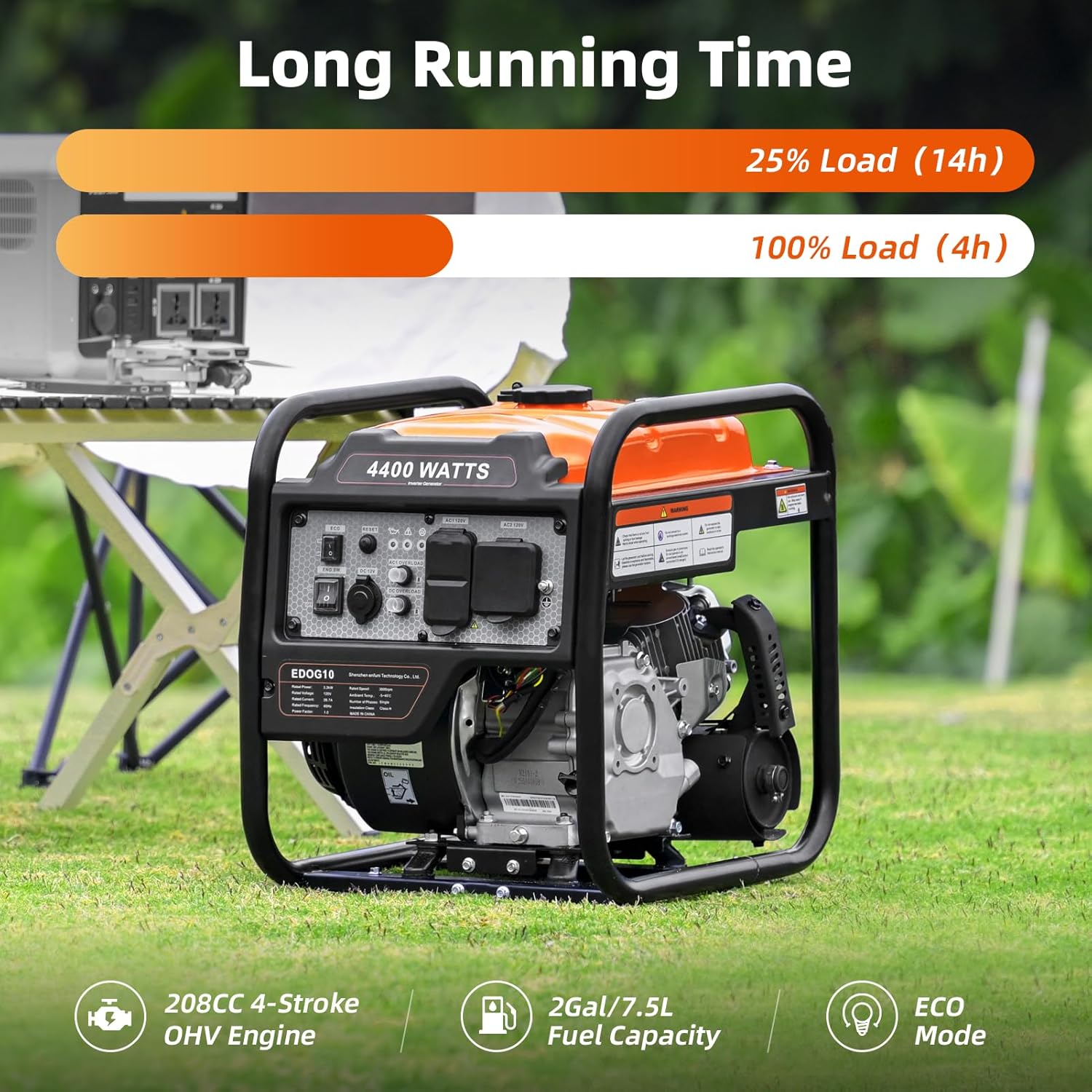
At 56 lb, it falls on the more manageable side of portable generation, though fuel and accessories add to the real transport load. Plan how the unit will be moved, secured, protected from weather without restricting ventilation, and cooled before refueling or storage.
Closest catalog alternatives
Three similar generators worth comparing.
ECHO
EGi-4000
3,400W running · 4,000W peak · Gasoline
Inspect modelRYOBI
RYi4000
3,400W running · 4,000W peak · Gasoline
Inspect modelRYOBI
RYi4022X
3,400W running · 4,000W peak · Gasoline
Inspect modelQuick answers
Oxseryn EDOG10 4400W Inverter FAQ
How many running watts does the Oxseryn EDOG10 4400W Inverter provide?
3,400 running watts are listed in the normalized catalog. The model also lists 4,400 peak watts for temporary startup demand.
What fuel does the Oxseryn EDOG10 4400W Inverter use?
Gasoline. When multiple fuels are supported, verify the separate output and runtime figures for the fuel you plan to use.
How often should the Oxseryn EDOG10 4400W Inverter receive maintenance?
Follow the exact owner’s manual for break-in, oil, filter, spark plug, valve, battery, storage, and inspection intervals. Track both calendar dates and engine hours.
Sources and method
Check the evidence behind the analysis.
Continue this model research