Load planning
What Can the Champion 201050 4000W Dual Fuel Inverter Run? A Practical Load Guide
See what the Champion 201050 4000W Dual Fuel Inverter can run using its 3,000 running watts and 4,000 peak watts, startup-surge planning, realistic load groups, and capacity headroom.
As an Amazon Associate we earn from qualifying purchases. We do not copy Amazon pricing into this article because price and availability change.
Direct answer
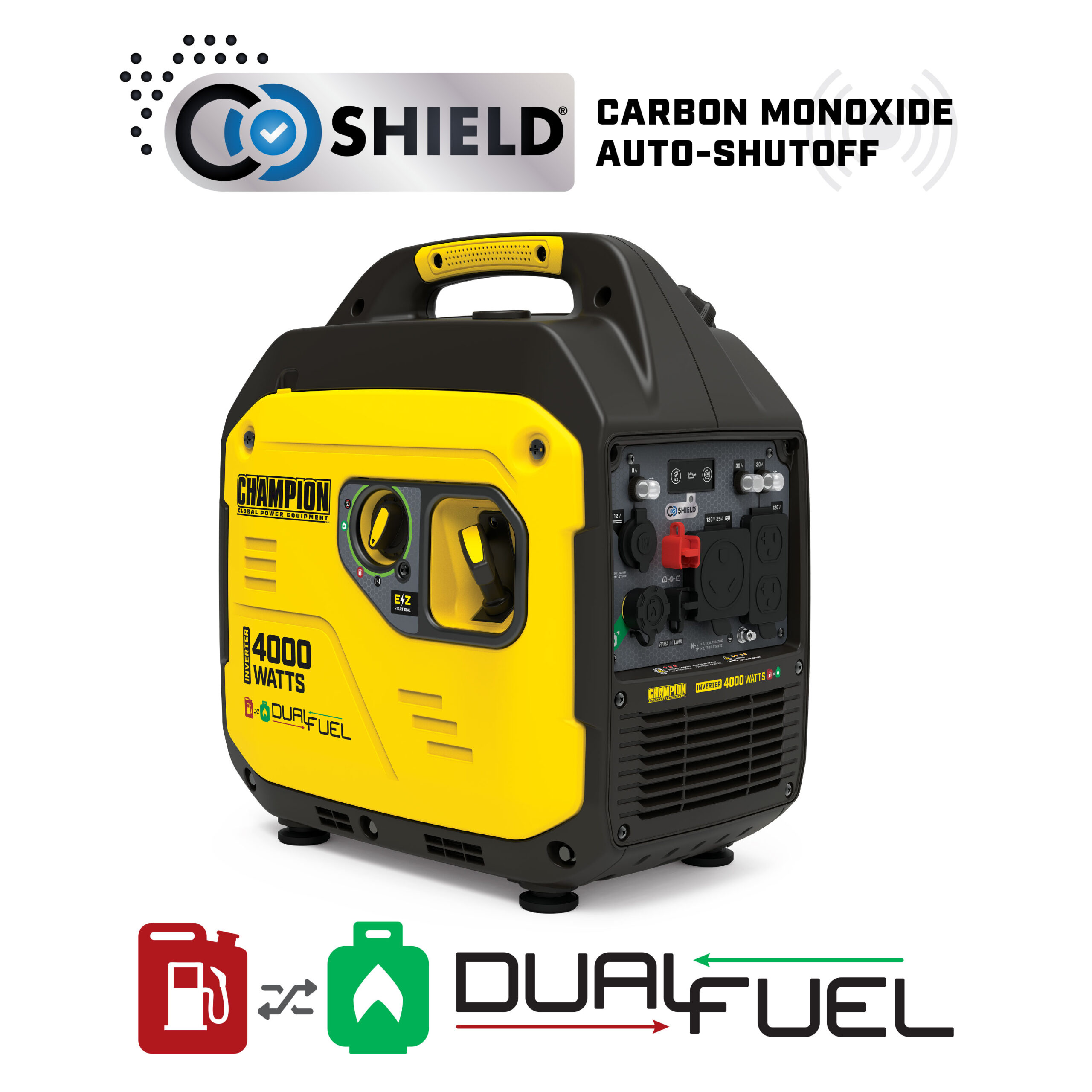
Build around no more than roughly 2,400 watts of planned continuous load, then verify the largest motor-starting surge separately. The Champion 201050 4000W Dual Fuel Inverter publishes 3,000 running watts and 4,000 peak watts.
Running output
3,000W
Peak output
4,000W
Published weight
51.8 lb
Class score
46/100
Start with rated output—not the largest number on the box
Champion 201050 4000W Dual Fuel Inverter is listed at 3,000 running watts and 4,000 peak watts. Running output is the steady budget. Peak output is temporary headroom for motor and compressor starts; it should not be totaled as if it were continuously available.
A conservative first-pass plan keeps continuous loads near or below about 2,400 watts, leaving roughly 20% headroom for variation. That is not a universal manufacturer rule; it is a planning buffer. Verify every appliance nameplate and the generator manual before connecting equipment.
Build one realistic load group
For a home-outage plan, start with refrigeration, a furnace blower or portable heating-control load where applicable, a sump or well pump if essential, lighting, internet equipment, and charging. Do not assume all major appliances can run together. Add the devices that operate simultaneously, then reserve the largest additional starting surge.
For an RV or work plan, use the same method: identify the single largest motor start, then add the smaller steady loads. Air conditioners, pumps, compressors, and power tools can create brief demand well above their running label. The calculator on Find My Generator is designed to document that difference.
What this output class usually means
With 3,000 rated watts, this model is best treated as selected-circuit backup rather than unrestricted whole-home power. It may support more or fewer devices than that summary suggests because appliance ratings, duty cycles, altitude, temperature, and fuel choice can change the usable plan.
Running output is 3,000W, compared with a 3,500W median across 177 mid output inverter generators; higher than 9% of its class. That comparison describes the catalog class; it does not replace the electrical ratings on your equipment.
Fuel choice can change the answer
Gasoline + Propane gives the owner more flexibility during an outage, but rated output and runtime can change by fuel. Compare the fuel-specific figures on the full specification page instead of assuming the gasoline rating applies to every fuel.
When a model publishes several fuel ratings, size the plan from the fuel you expect to use—not from the largest gasoline number. If the lower fuel-specific rating no longer starts the critical load, the backup plan needs to change before the purchase.
Loads to verify instead of guessing
Central air conditioning, electric resistance heat, electric water heaters, ranges, dryers, large welders, deep-well pumps, and medical equipment all deserve exact nameplate and startup data. Some require 240V or a receptacle and current rating that a wattage headline cannot confirm.
Never backfeed a home through a wall receptacle. Household-circuit connections require approved transfer equipment and qualified installation as applicable. Fuel-burning generators must remain outdoors, at least 20 feet from the home, with exhaust directed away from doors, windows, and vents.
Closest catalog alternatives
Three similar generators worth comparing.
Sportsman
GEN3500DFI
3,000W running · 3,500W peak · Gasoline + propane
Inspect modelGenerac
iQ3800 Dual Fuel 49ST
3,000W running · 3,800W peak · Gasoline + propane
Inspect modelGenerac
iQ3800 Dual Fuel 50ST
3,000W running · 3,800W peak · Gasoline + propane
Inspect modelQuick answers
Champion 201050 4000W Dual Fuel Inverter FAQ
How many running watts does the Champion 201050 4000W Dual Fuel Inverter provide?
3,000 running watts are listed in the normalized catalog. The model also lists 4,000 peak watts for temporary startup demand.
What fuel does the Champion 201050 4000W Dual Fuel Inverter use?
Gasoline + Propane. When multiple fuels are supported, verify the separate output and runtime figures for the fuel you plan to use.
Can the Champion 201050 4000W Dual Fuel Inverter run a central air conditioner?
Possibly, but the exact answer requires the air conditioner running and startup ratings, voltage, connection method, and other simultaneous loads. Do not decide from generator peak watts alone.
Sources and method
Check the evidence behind the analysis.
Continue this model research